
Table of Contents
- What to Do Immediately After a Car Accident
- Evidence to Collect After a Car Accident
- When to Hire a Car Accident Lawyer
- What to Tell a Car Accident Lawyer
- Urgent Legal Help After Hit-and-Run Accidents
- How Urgent Legal Help Protects Your Compensation
- Frequently Asked Questions
Last Updated: October 18, 2026
What to Do Immediately After a Car Accident
The first 15 minutes after a crash determine what evidence you preserve and what you lose, affecting your ability to get urgent legal help after accident claims later. (Source: National Highway Traffic Safety Administration (NHTSA) data)
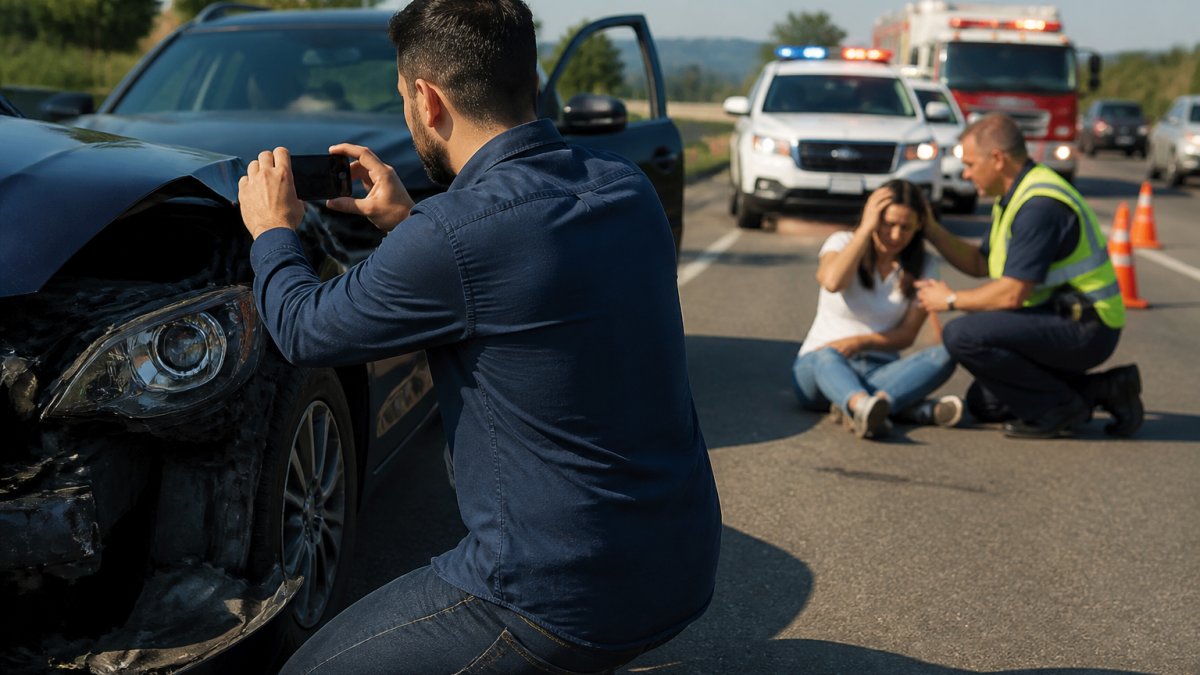
The First 15 Minutes: Safety and Documentation
Move to safety: hazard lights on, vehicle out of traffic if possible, engine off.
Check yourself and passengers for injuries, pain, bleeding, or difficulty breathing. Call 911 if anyone needs care.
Take photos of the scene:
- All vehicle damage (multiple angles)
- The accident location and road conditions
- Traffic signs and signals
Write down the other driver’s information:
- Full name and phone number
- Driver’s license number
- Insurance company and policy number
Get witness contact information immediately: names, phone numbers, and what they saw.
Do not admit fault or say “I’m sorry” or “It was my fault.” Stick to facts like “The light was green.” Insurers use your words against you later.
When to Call 911 or Seek Emergency Medical Care
Call 911 immediately if anyone has visible injuries, chest pain, difficulty breathing, or loss of consciousness.
Some injuries don’t show up immediately. Watch for headaches, dizziness, neck or back pain, numbness, blurred vision, nausea, or abdominal pain, and go to an emergency room or urgent care if you feel any.
Tell the doctor exactly what happened and describe your symptoms. These medical records become evidence for your claim.
Evidence to Collect After a Car Accident
Evidence wins claims only if it survives the weeks between the crash and the first demand letter.
The 24-Hour Evidence Sweep
Treat the first day as a deadline. Complete this sweep before bed:
- Download and back up photos and video. Copy everything to a second location (cloud plus physical drive) and label the folder with date and location.
- Export dashcam and telematics footage. Many dashcams overwrite within 24-72 hours. Pull your memory card now, and note any other dashcam so your lawyer can send a preservation letter before it’s erased.
- Screenshot the scene metadata. Open each photo and screenshot the timestamp and location data. This locks in when and where the image was taken.
- Write a same-day narrative. Type a chronological account, what you were doing, the weather, the road, the impact, who arrived and when, and time-stamp it.
- Log every witness while details are fresh. Full name, phone, email, and a one-line summary, a witness reachable in week one is often gone by week six.
The evidence that disappears first is the evidence nobody backed up on day one. Dashcam loops, doorbell clips, and business surveillance footage are routinely overwritten within days. Send a written preservation request to any business near the scene as soon as you identify one.
Scene, Vehicle, and Witness Documentation
Photos are your best evidence if shot and organized correctly.
- Wide shots first, then close-ups. Shoot the overall scene from several corners, then close-ups of damage, road conditions, signage, and debris.
- Capture identifiers. The other vehicle’s license plate, VIN, registration, and insurance card. Photograph the driver’s license if they consent; otherwise write the details down.
- Record the environment. Weather, lighting, traffic signals, skid marks, and road defects. If a pothole or missing sign contributed, photograph it before repair.
Preserving Medical Records and Injury Evidence
Medical records prove your injuries only if complete and consistent.
Request copies of every record from every provider who treated you:
- Emergency room notes and discharge instructions
- Doctor’s office visits and referrals
- Physical therapy and chiropractic sessions
Keep a symptom diary: daily pain levels on a 1-10 scale, limitations, sleep disruption, and effects on work and activities. A contemporaneous diary beats a recollection reconstructed months later.
Photograph visible injuries over several days as bruises and swelling change. Save every bill and invoice, including pharmacy receipts, medical equipment, and mileage to appointments.
Do not post about the crash, your injuries, or your recovery on social media. Insurers review public posts, and a photo of you at a social event can be used to argue your injuries are minor. If you have already posted, do not delete it, tell your lawyer instead, because deletion can create its own problems.
Digital Evidence and Preservation Letters
Modern crashes leave a digital trail. Preserve it early:
- Dashcam and telematics. Your vehicle, the other vehicle, and nearby commercial fleets may have recorded the crash.
- Surveillance footage. Businesses, doorbell cameras, and traffic cameras near the scene may have captured the impact, often overwritten within days.
- Phone records and messages. Save texts, call logs, and messages with the other driver or witnesses.
A preservation letter is a written demand to keep evidence, sent to a business, dashcam owner, or insurer. Sending it early is often the difference between having footage and having a witness who “thinks there was a camera.”
Organizing the File So It Is Usable
Create one master folder with subfolders: Photos, Video, Witnesses, Police Report, Medical Records, Bills, Diary, and Correspondence. Name files with the date and a short description, and keep a one-page timeline on top. An organized file shortens intake and shows the insurer you are prepared.
Evidence is perishable. The 24-hour sweep, the preservation letter, and the organized file separate a strong claim from a stack of blurry photos and a witness who no longer answers the phone.
When to Hire a Car Accident Lawyer
You need urgent legal help after accident situations when the other driver’s insurer denies your claim, offers far less than your damages, or when injuries are serious, hospitalization, surgery, permanent disability, or ongoing treatment.
Hire a lawyer if:
- Your injuries required emergency room care
- You were hit by a commercial vehicle
- The settlement offer seems too low (Source: American Bar Association’s guidance on choosing an attorney)
Time matters. Many states have deadlines for filing lawsuits, and a lawyer protects your right to sue before that deadline passes. We connect you with experienced personal injury attorneys in less than five minutes.
Do not wait weeks or months. Call immediately after the accident. Early legal help protects your evidence and your claim.
What to Tell a Car Accident Lawyer
Your lawyer needs complete, honest information. Tell them:
- Exactly what happened before, during, and after the crash
- All injuries you sustained
- All medical treatment you received
Be thorough. Small details matter. Your lawyer uses this information to build your case.
What NOT to Say to Insurance Companies or Other Drivers
Insurance adjusters are trained to minimize payouts. Do not:
- Admit fault or apologize for the crash
- Guess about how the accident happened
- Agree that your injuries are minor
Say only: “I was in an accident. Please contact my attorney.” Then stop talking.
Do not answer questions about your medical history, previous injuries, or lifestyle. Insurers use your answers to argue your injuries came from something else, not the accident.
Urgent Legal Help After Hit-and-Run Accidents
A hit-and-run leaves you without the other driver’s insurance information, making it the case type where urgent legal help after accident matters most. This section explains the mechanism and the deadlines.
Report the Hit-and-Run Immediately
Report the crash to police as soon as it is safe. Provide:
- Date, time, and location
- Description of the other vehicle (color, size, damage, license plate if visible)
- Direction the vehicle went
A police report creates an official record and may surface the driver through plate readers, surveillance, or repair-shop reports. It also supports your uninsured motorist claim, because insurers typically require a police report for hit-and-run claims.
How Uninsured and Underinsured Motorist Coverage Works
Most auto policies include uninsured motorist (UM) coverage and underinsured motorist (UIM) coverage. UM pays your medical bills and vehicle damage when the at-fault driver is uninsured or unidentified.
Your UM/UIM claim works like a regular insurance claim, but against your own insurer:
- You report the claim to your own insurance company.
- The insurer investigates and evaluates damages.
- The insurer pays up to your policy limits.
Two practical points matter. First, UM/UIM limits are set by your policy, so check your declarations page now. Second, some policies require prompt notice of a hit-and-run and police reporting within a set period.
Your own insurer is not a neutral party in a UM/UIM claim. Adjusters may argue the crash was your fault, that injuries pre-existed, or that the other driver was not actually uninsured. Treat the claim as adversarial from the first call.
Deadlines and Jurisdiction-Specific Rules
Every state sets its own statute of limitations for personal injury lawsuits, and the window can be as short as one year or as long as several years depending on the state and claim type.
A lawyer can confirm the deadline, send preservation letters, and file before the window closes. If you are handling the claim yourself, at minimum calendar the deadline and the insurer’s notice requirement.
Finding Immediate Legal Help and Verifying Availability
When you need help tonight, the question is not just who is a good lawyer but who can act now.
- Call after hours. Many firms route after-hours calls to an answering service or an on-call attorney. Ask directly: “Is an attorney available tonight, or will I be called back tomorrow?”
- Ask about response expectations. A firm that promises a callback within a set time is easier to evaluate than one that says “soon.” Get a specific window.
- Verify the attorney. Check the state bar’s online directory for license status and any public discipline record. Confirm the firm’s address and that the attorney is licensed in your state.
Why Hit-and-Run Claims Need a Lawyer Early
Hit-and-run claims are more complex than a standard claim because the defendant is unknown and recovery often runs through your own UM/UIM coverage. Your lawyer negotiates with your own insurer, often harder than dealing with the at-fault driver’s insurer, and must preserve evidence before surveillance footage and dashcam loops disappear. Early involvement protects both the evidence and the coverage position.
In a hit-and-run, the clock starts immediately: report to police, check your UM/UIM limits, confirm the deadline, and verify an attorney who can act tonight. The driver may be gone, but the coverage and the evidence are not.
How Urgent Legal Help Protects Your Compensation
A lawyer protects you in ways you cannot protect yourself. They:
- Calculate your true damages (medical bills, lost wages, pain and suffering)
- Negotiate with insurance companies
- File lawsuits before deadlines pass
Insurance companies pay less to people without lawyers. They count on you accepting low offers because you don’t know your case’s value.
Most personal injury lawyers work on contingency. You pay nothing upfront. They take a percentage of your settlement or court award.
Getting urgent legal help after accident situations is not optional when injuries are serious.
Frequently Asked Questions
What should I do immediately after a car accident?
First, ensure everyone is safe and move to a secure location if possible. Call 911 if anyone is injured or if there is significant property damage. Exchange driver and insurance information with other parties involved. Document the accident scene with photos of vehicle damage, road conditions, and traffic signs. Get contact information from witnesses. Do not admit fault or discuss details beyond basic information. Report the accident to your insurance company and contact a personal injury attorney to protect your legal rights and compensation claim.
When should I contact a lawyer after an accident?
Contact a lawyer as soon as possible after an accident, ideally within the first few hours. Early legal guidance helps preserve evidence, protects you from making statements that harm your claim, and ensures you meet critical deadlines. This is especially important if you have sustained injuries, the accident involved significant property damage, or the other driver is uninsured. Many personal injury attorneys offer free consultations and can begin protecting your case immediately while you focus on recovery.
What evidence should I collect after an accident?
Photograph the accident scene from multiple angles, including vehicle damage, road conditions, traffic signals, and weather. Collect names, phone numbers, and addresses from witnesses and the other driver. Get the other driver’s insurance information and license plate number. Note the date, time, location, and weather conditions. Preserve medical records and photographs of your injuries. Keep receipts for medical treatment, lost wages, and repair costs. If police respond, obtain the report number. Document any ongoing symptoms or treatment. This evidence is critical for establishing liability and calculating fair compensation for your injuries and damages.
What should I tell a car accident lawyer during our first conversation?
Provide a clear timeline of the accident, including the date, time, location, and how the collision occurred. Describe your injuries, medical treatment received, and any ongoing symptoms. Share information about the other driver, witnesses, and police involvement. Explain what you have already reported to your insurance company. Bring any documentation you have: photos, medical records, receipts, and witness statements. Be honest about any contributing factors, such as weather or your own actions. Your attorney will ask about your expenses and lost wages to calculate damages. This information helps your lawyer assess your case and determine the best legal strategy to secure compensation.
If you’ve been injured in a car accident, don’t navigate the claims process alone. 305-800-PAIN connects you with experienced personal injury attorneys in less than five minutes. Our 24/7 team matches you with lawyers who specialize in your type of accident and get you the compensation you deserve. Call now to speak with a qualified attorney who can protect your rights and maximize your recovery.