
Quick Summary
After a rideshare accident, first get to safety and call 911, even for a minor-seeming crash. Get medical care promptly, since injuries can appear hours or days later. Document the scene, vehicles and trip details, and report the crash to police and the rideshare app.
- Call 911 right away, and do not leave the scene before police and medical help arrive.
- Get medical care even if injuries seem minor, because many injuries appear hours or days later.
- Screenshot your rideshare trip details in the app before the data changes or expires.
- Get a police report number and officer name, and report the crash through the rideshare app.
- Ask the rideshare company and each insurer in writing which policy applies at the time of the crash.
7 Steps to Take After a Rideshare Accident
Last Updated: November 17, 2026
Step 1: Get to Safety and Call 911
Your first priority after any rideshare accident is safety. Move to a safe spot if you can do so without causing more harm. If you are stuck or badly hurt, stay put and wait for help. (Source: Centers for Disease Control and Prevention)
Call 911 immediately if anyone is injured, there is a medical emergency, the crash creates a traffic hazard, or emergency assistance is needed. For minor crashes without injuries or immediate danger, follow local law enforcement procedures for reporting the accident. When in doubt about someone’s safety, contact emergency services.
When you call, be ready to share:
- Your exact location
- Whether anyone is hurt, and how badly
- The make, model and color of each vehicle
- Whether the rideshare app was on and the trip was active
Watch out: If you are a driver involved in a crash, follow Florida’s legal requirements for stopping, exchanging information, and providing assistance when necessary. If you are a passenger, prioritize your safety, seek medical attention when needed, and provide relevant information to responding officers. Do not remain in an unsafe location simply to wait for authorities.
Use this quick checklist to see what to prioritize at the scene and what to share with 911 dispatch.
|
Step |
What to do |
Time or frequency |
|---|---|---|
|
Get to safety |
Move only if it causes no more harm; otherwise stay put |
Immediately after the crash |
|
Call 911 |
Call even for a minor-seeming crash |
Right away |
|
Share location |
Give your exact location |
When you call |
|
Report injuries |
Say whether anyone is hurt and how badly |
When you call |
|
Describe vehicles |
Give make, model and color of each vehicle |
When you call |
|
Confirm app status |
Say whether the rideshare app was on and the trip active |
When you call |
|
Stay at scene |
Do not leave before police and medical help arrive |
Until help arrives |
Step 2: Get Medical Care, Even If Your Injuries Seem Minor
Many injuries do not show up for hours or even days after a crash (the CDC). Whiplash, concussions and internal bleeding can all feel mild at first. That is why a medical check matters so much.
Get checked by a doctor, urgent care clinic or emergency room as soon as you can. Ask for your records and keep copies of every bill, prescription and visit summary.
Florida’s Personal Injury Protection (PIP) law generally requires eligible individuals to receive initial medical services and care within 14 days of a motor vehicle accident to qualify for PIP medical benefits. Coverage depends on eligibility, the applicable insurance policy, and statutory requirements.
For Uber and Lyft accidents, determining which insurance coverage applies can be more complicated, particularly for passengers and rideshare drivers. A qualified Florida personal injury attorney can help explain how the available insurance coverage may apply to your circumstances.
A medical record made soon after the crash also links your injuries to the accident. Our guide on how to document injuries after an accident walks through recording them step by step. Insurers often question injuries that were not treated for weeks, so do not skip care because you feel okay for the moment.
Step 3: Document the Scene, Vehicles and Trip Details
Good records make every later step easier. Our guide on documenting injuries for a lawsuit explains how to build evidence for a possible claim. Take photos and videos of the scene before the cars are moved, if it is safe to do so. Capture the damage to every vehicle, skid marks, traffic signs, road conditions and the positions of the cars.
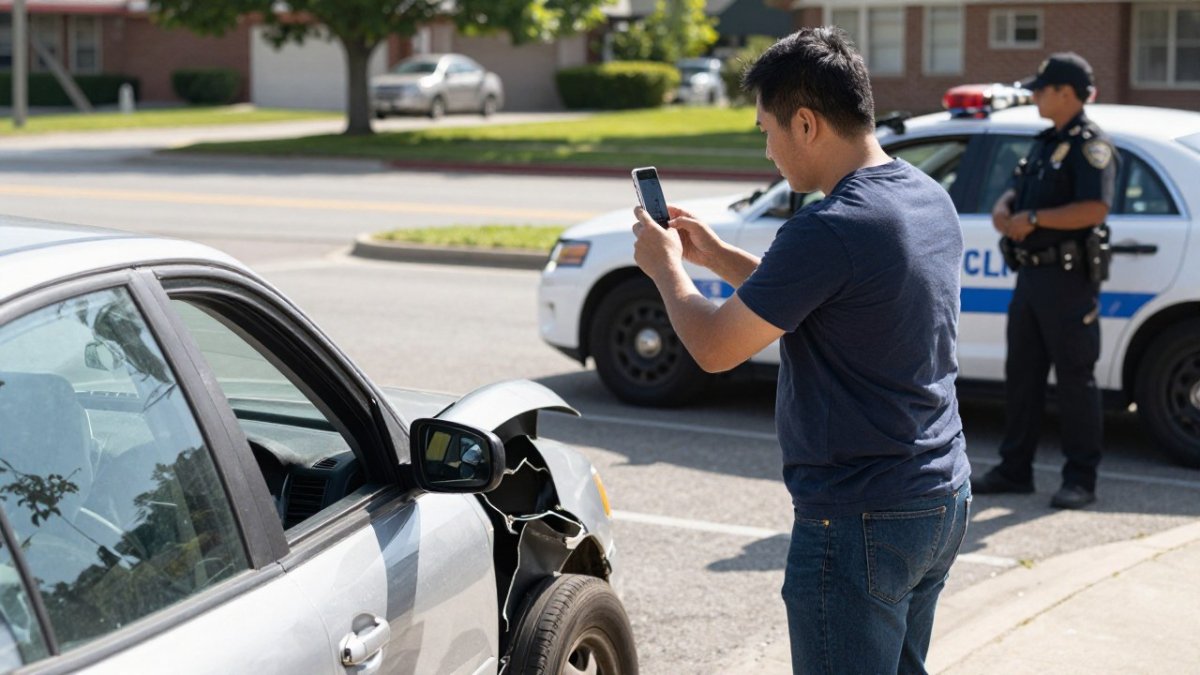
Record these details for each vehicle involved:
- License plate number
- Registration and insurance card information
- The driver’s name, phone number and insurance company
Write down contact details for any witnesses. A witness statement can settle a dispute about who caused the crash.
Your rideshare trip record is also evidence. Screenshot your trip details in the app, including the pickup time, route, driver name and vehicle. Save these before the app data changes or expires.
Step 4: Report the Crash to Police and the Rideshare App
Make sure a police report is filed, even if the officer says one is not needed. Ask for the report number and the officer’s name and badge number. Get a copy of the report once it is available.
Next, report the crash through the rideshare app. Uber and Lyft both have in-app steps for reporting an accident. Use the app’s safety or help center and give a clear, factual account of what happened.
Keep your report short and accurate. Stick to what you saw and what you did. Avoid guessing about speed, fault or injuries you have not yet been checked for.
What Happens to Your Insurance Claim After a Rideshare Crash
Rideshare insurance is not one policy. Coverage usually depends on the driver’s app status at the moment of the crash, and the answer changes depending on whether you were a passenger, the rideshare driver, or the occupant of another vehicle. Our article on how to prove fault in a car accident explains how fault is established, which often decides the claim outcome. (Source: Florida Department of Highway Safety and Motor Vehicles)
How App Status Changes Rideshare Insurance Coverage in Florida
Insurance coverage after an Uber or Lyft accident depends on the driver’s status in the rideshare app and the circumstances of the crash.
1. Driver Offline — App Not Active
When the driver is not logged into the rideshare platform, the driver’s personal auto insurance generally applies, subject to the terms and conditions of the policy.
2. Driver Online — Waiting for a Ride Request
When the driver is logged into the rideshare app but has not accepted a ride request, Florida law requires specified liability insurance coverage during this period, including at least:
- $50,000 for bodily injury or death per person
- $100,000 for bodily injury or death per accident
- $25,000 for property damage
Additional coverage requirements may apply.
3. Ride Accepted — Passenger Pickup or Active Trip
Once a ride request is accepted and until the passenger exits the vehicle, Florida law requires primary automobile liability insurance providing at least $1 million in coverage for death, bodily injury, and property damage.
The law also includes requirements involving uninsured and underinsured motorist coverage during this period.
Important: The availability of insurance benefits depends on the facts of the accident, the applicable policies, and Florida law. These coverage limits do not guarantee a particular settlement or payment.
Practical claim steps
- Open a claim with the rideshare company through the app and save the claim number.
- Open a claim with the other driver’s insurer if another vehicle was involved.
- Send each insurer the police report number, photos, medical records, and your written account.
- Keep a log of every call, email, and adjuster name.
- Do not sign a release or accept a quick settlement before all injuries are documented.
Watch out: Statements you make in the app, in texts, or to an adjuster can be used to argue you were at fault or that the driver was offline, so keep every account factual and consistent.
Deadlines and state rules
Claim deadlines and fault rules can differ by state. Confirm the deadlines that apply where the crash happened with the official source, rather than assuming one rule fits every case.
Uber Passenger Accident Settlement Amounts and What Affects Them
There is no standard settlement amount for a rideshare crash. What a claim is worth depends on the evidence, the injuries, and which policy responds, and the same crash can produce very different outcomes for a passenger, a driver, and an occupant of another vehicle. You can read about Uber and Lyft accident lawyers who handle these cases.
What drives the number
Settlement values are commonly tied to a set of factors:
- Medical costs: Emergency care, follow-up visits, physical therapy, and future treatment. Keep every bill and visit summary.
- Lost wages and earning capacity: Pay stubs, employer letters, and tax records document time off work and any longer-term loss.
- Pain and suffering: Usually the most disputed part, and the part most tied to how consistent and well documented the injury record is.
- Available insurance limits: The rideshare company’s commercial policy, the driver’s personal policy, and any other driver’s policy each have limits. A strong claim against a small limit still pays only up to that limit.
- Fault and comparative negligence: Fault rules can reduce or bar an award depending on the jurisdiction. Confirm the rule that applies where the crash happened.
- Quality of evidence: The police report, photos, app trip record, witness statements, and medical records all affect how insurers value the claim.
Why role matters
- Passengers may find the trip record helpful, since it can show they were in the vehicle during the trip.
Delayed symptoms and later claims
Some injuries, including whiplash and concussions, may not feel serious for hours or days. If symptoms appear later, see a doctor promptly and tell the provider when the crash happened and what symptoms you noticed. Document the date each symptom started and keep a daily log. Insurers often question injuries that were not treated soon after the crash, so a clear timeline linking the symptoms to the crash matters.
Timeline for the first hours, days, and weeks
- First hours: Get to safety, call 911, get medical care, and save the trip receipt and driver details in the app.
- First days: Report the crash in the app, get the police report number, photograph injuries, and open insurance claims.
- First weeks: Attend follow-up medical visits, keep a symptom and treatment log, and send records to each insurer.
- Later: Review settlement offers only after treatment is complete or a doctor has stabilized your condition, and confirm any state deadlines before signing anything.
Watch out: A quick settlement offer can look attractive before the full extent of an injury is known. Review any release carefully before signing.
Next Step: Talk With a Florida Personal Injury Attorney
Rideshare accident claims involve several insurers, complex coverage rules and strict deadlines. Legal guidance early can help you understand your options. Our service at 305-800-PAIN connects injured people with experienced attorneys, often within minutes.
Call 305-800-PAIN today to get connected with a personal injury attorney who understands rideshare claims.
Frequently Asked Questions
What happens if you get into an accident in a rideshare?
Stop, move to safety if you can, and call 911. Get medical care even if you feel fine, since some injuries appear hours or days later. Report the crash to police and to the rideshare app. Document the scene, and collect the other driver's details and the names of any witnesses. Insurance coverage for a rideshare trip depends on the driver's app status at the time of the crash, so keep your trip records and app screenshots. A personal injury attorney can explain which insurance policies may apply to your situation.
Who is liable in a rideshare accident?
Liability depends on how the crash happened. It may fall on the other driver, the rideshare driver, or both, and in some cases a third party such as a vehicle manufacturer is involved. Because these rules are complex and fact-specific, a Florida personal injury attorney can review your police report and insurance policies to identify the responsible parties.
How do I report an Uber or Lyft accident?
Report the crash through the in-app safety or support feature so the company has a record of the trip. Also file a police report, since the official report is often needed for insurance and legal claims. Ask for the report number and the responding officer's name. Keep copies of any incident reports you submit, and note the date and time you reported the crash. If you are unsure which reports to file, an attorney can help you confirm you have submitted everything needed.
What should I do after an Uber accident as a passenger?
As a passenger, your first priorities are safety and medical care. Get checked by a doctor, keep records of every visit, and save any bills and receipts. Request a copy of the police report and gather the contact and insurance information of the drivers involved. The process can be complicated when several insurance policies apply. Speaking with a personal injury attorney early can protect your right to compensation. Call 305-800-PAIN to be connected with a Florida attorney.
