Last Updated: November 1, 2026
Quick Summary
To get a police report in Florida after a crash, request it through the state’s online Crash Portal, an Florida Highway Patrol troop station, or the local agency that worked the scene. Pick the path matching the agency that responded, and note that reports often appear only after the officer completes the file.
- The Florida Crash Portal is the fastest route and lets you search, pay, and download most filed reports online.
- For crashes worked by the Highway Patrol, call the troop station first to confirm the report is ready.
- Florida Statute 316.066 sets the rules agencies follow for crash reports, including the long-form completion timeline.
- During the restricted window, only involved drivers, owners, passengers, attorneys, insurers, and similar parties may obtain a copy.
- If no officer filed a report, file a self-report with the state and gather photos, witness names, and insurance details.
Table of Contents
- Where to Request a Police Report for an Accident in Florida
- Getting Your Florida Accident Report Online Through the Crash Portal
- Requesting a Florida Highway Patrol Accident Report
- In-Person and Mail Requests at the Investigating Agency
- Who Can Access Florida Accident Report Public Records
- Waiting on Availability, Delays, and Correcting Errors
- Getting a Car Accident Report Without Police Report on File
- Your Request Checklist Before You Call 305-800-PAIN
- Frequently Asked Questions
Where to Request a Police Report for an Accident in Florida
If you need a police report in Florida after a crash, you have three ways to get it: the state’s online Crash Portal, a Florida Highway Patrol station, or the local agency that worked the scene. The most common stumbling block is calling the wrong agency first, which can cost days.
A crash report is the official record of your accident. It lists the crash date, location, involved parties, and driver and vehicle information. Insurers lean on it when you file a claim. So does any attorney reviewing your case.
Below, we break down how to get a police report for an accident in Florida step by step, including what to do when no officer filed one.
The Three Request Paths at a Glance
Each path works for a different situation. Here is how they compare:
| Request Path | Best For | What You Need | How You Get It |
|---|---|---|---|
| Florida Crash Portal | Reports already filed by an agency | Crash date, county, report number | Download online |
| FHP troop station | Crashes worked by the Highway Patrol | Crash location and date | In person or by mail |
| Local investigating agency | Crashes worked by city or county police | Report number or case details | Records window, mail, or online |
Pick the path that matches the agency that responded to your crash. If you are unsure which agency that was, the portal search usually tells you.
Getting Your Florida Accident Report Online Through the Crash Portal
The fastest route is the Florida Crash Portal, run by the state’s highway safety agency. Most reports filed by law enforcement show up there, and you can search, pay, and download a copy without leaving home.
Information You Need Before You Search
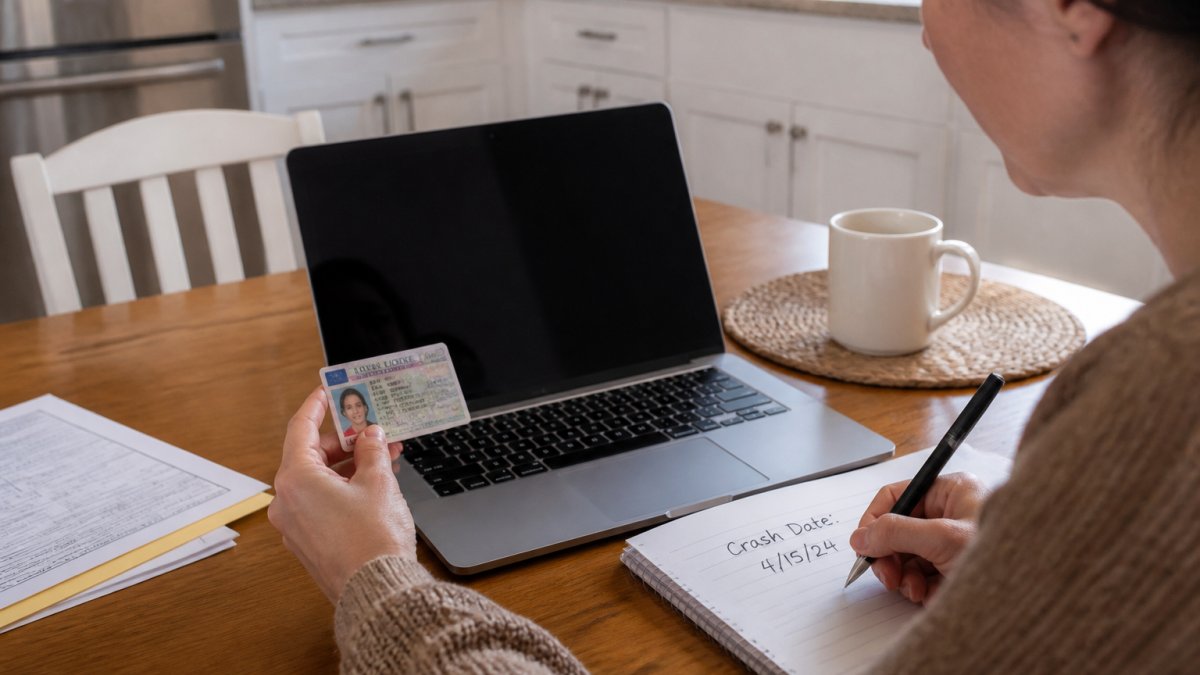
Gather these details first. A missing item is the number one reason searches fail:
- Crash date, or a range of a few days around it
- County where the crash happened
- Report number, if an officer gave you a card at the scene
Paying the Fee and Downloading the Copy
The state charges a set fee per report, and the portal adds a convenience fee for card payment. Florida’s official crash report page lists the current fee, so check it before you pay.
Watch out: if the report is not online yet, do not pay twice. Call the investigating agency and ask whether the crash investigation is closed. Reports often appear only after an officer finishes the file.
Requesting a Florida Highway Patrol Accident Report
For crashes worked by the Highway Patrol, you can request a Florida Highway Patrol accident report directly from the troop that handled the scene. This is the right path when a state trooper responded rather than a city or county officer.
Finding the Nearest FHP Troop Station
The Highway Patrol divides the state into troops, and each troop covers set counties. Look up your crash county, find the matching troop, then call that station before you drive over. Ask two questions: is the report ready, and what do you need to bring?
Bring your driver’s license, the crash date, and the report number if you have it. Mail requests work too, but processing takes longer.
In-Person and Mail Requests at the Investigating Agency
City police departments and county sheriff’s offices keep their own crash records. Visit the records window during business hours, or send a written request form with a check for the fee. Florida Statute 316.066 sets the rules agencies follow for crash reports, including the timeline for completing a long-form report.
Mail requests need a self-addressed stamped envelope and a copy of your photo ID. Expect a longer wait than an online request.
Who Can Access Florida Accident Report Public Records
Crash reports are public records, but access is not automatic for everyone at every moment. The controlling statute is Florida Statute 316.066, which sets a restricted window and defines who may obtain a copy during that window. Understanding the rule prevents wasted trips and failed portal searches.
The Restricted Window and Who Qualifies
For a period after the crash, a crash report may be restricted from general public disclosure. During that window, the following parties may obtain a copy:
- Each driver involved in the crash
- The registered owner of any vehicle involved
- Any passenger in a vehicle involved
The restricted window is tied to the completion of the investigating officer’s report and the statutory timeline for the long-form report. In practice, the report may be confidential until the agency completes and releases it, and the agency controls when it becomes available. Once the restricted period ends, the report becomes available to the general public.
Proof of Eligibility You May Need
If you request a copy during the restricted window, be ready to show that you qualify. Agencies commonly ask for:
- A government-issued photo ID matching a name on the report
- Proof of vehicle ownership, such as a registration or title
- A letter of representation if you are an attorney
Agencies may release the report only to a named party or their legal representative, so bring identification. If you are a passenger or a family member of a passenger, ask the records clerk what proof they accept before you arrive.
Confidential Information Within the Report
Even when you are eligible, some information may be redacted or withheld. Personal identifying information such as driver license numbers, home addresses, and certain medical or emergency contact details can be protected. The report may also carry a confidentiality designation requested by an involved party in limited circumstances. If a portion of your copy is blanked out, that is usually a statutory redaction rather than an error.
If you are an involved driver, request your copy as soon as the report is completed. You do not need to wait for the public-release window, and having the report early helps you review it for errors while the officer’s file is still fresh.
If you are dealing with adjusters after you get the report, our guide on handling insurance adjusters in Florida walks through what to say and what to put in writing.
Waiting on Availability, Delays, and Correcting Errors
A crash report is not finished the moment the tow truck leaves. An officer must complete the investigation, interview involved parties, and finalize the long-form report before it is released. Florida Statute 316.066 sets the timeline the agency follows for completing the long-form report, and that statute is the lever you use if an agency stalls.
When Reports Become Available
Realistic expectations help you plan:
- A report is typically available only after the investigating officer completes and files it.
- Simple crashes may be finalized within days; crashes involving injuries, fatalities, or complex scenes can take weeks.
- A portal search may not show a report until the agency uploads it, so a missing result does not always mean the report does not exist.
Searching the portal too early can make it seem no report exists. Call the investigating agency’s records unit and ask for the report status before you conclude anything.
How to Follow Up on a Delayed Report
Use a documented follow-up sequence:
- Note the crash date, location, and the agency that responded.
- Call the records unit and ask whether the long-form report has been completed and filed.
- Ask for the report number and the expected release date.
- If the report is past the statutory completion timeline, ask to speak with a records supervisor and reference the statute.
- Keep a written log of each call, including the date, the person you spoke with, and what you were told.
If the agency says the report is not ready, ask whether a short-form or preliminary report exists. A preliminary record can confirm the parties and the responding agency while you wait for the full report.
Correcting Errors in the Report
Errors are common: a misspelled name, a flipped vehicle description, a missing passenger, or an incorrect injury notation. The report is the officer’s record, so the correction process runs through the agency, not the portal.
- Identify each error precisely and cite the page or field where it appears.
- Send a written correction request to the investigating agency’s records unit, including your report number and contact information.
- Ask whether the agency requires a specific form or a sworn statement.
A correction request does not guarantee the officer will change the report, and some agencies will add a supplemental note rather than alter the original.
Do not alter, annotate, or digitally edit the PDF copy of your report before sending it to an insurer. Submit the clean copy and explain any errors in a separate written statement.
If the report is delayed or wrong in a way that hurts your claim, it helps to know your legal rights after an automobile accident before you call an insurer.
Getting a Car Accident Report Without Police Report on File
Sometimes no officer comes to the scene. Fender benders on private property, minor crashes, or busy nights when patrol units are tied up.
You can file a self-report with the state, and you should swap insurance and contact details with the other driver at the scene.
A common mistake is waiting to report a crash because no officer showed up. Our breakdown of common mistakes to avoid after a car accident covers the ones we see most.
Your Request Checklist Before You Call 305-800-PAIN
Use this checklist before you call us. It speeds up everything:
- Crash date, county, and location written down
- Report number, if you have one
- Name of the investigating agency or troop
If you were hurt and need help fast, our first-hour checklist after an accident covers the urgent steps.
A crash report is paperwork. Your recovery is not. If the report is delayed, wrong, or missing, or if an insurer is already pushing back, you do not have to sort it out alone. 305-800-PAIN is a referral service that connects injury victims in Florida with experienced legal professionals. Get started with 305-800-PAIN and get a real attorney on your side today by calling 305 800 PAIN to connect with an attorney.
Frequently Asked Questions
How long does it take for a Florida crash report to become available?
It depends on when the investigating agency completes and files the report. A long-form crash report is typically submitted to the state after the investigation is completed, so a report is rarely ready the same day. Serious crashes with injuries, commercial vehicles, or hit-and-run elements take longer. Check the Florida Crash Portal every few days using your crash date and county, and keep your request receipt if you paid a fee.
Are car accident reports public record in Florida, or is access restricted?
Florida accident report public records are not fully open. Under Florida law, crash reports may be restricted for a period after the crash and released only to qualified parties, such as those listed in the report, their legal representatives, and insurers. Confirm the current rules on the official state website. If you are a party to the crash, you can request your copy during the restricted period by proving your identity and role.
Can I get a car accident report without police report being filed at the scene?
Yes, in some situations. If no officer responded, you can file a self-report with the local law enforcement agency or the Florida Highway Patrol, depending on where the crash happened. Florida law sets reporting requirements for certain crashes; check the official state source for the current threshold. A self-report creates the official record your insurer and attorney will need. Keep photos, witness names, and the other driver’s insurance information to support it.
How much does a Florida crash report cost to request?
The Florida Highway Safety and Motor Vehicles Crash Portal lists its current fee per report, and some agencies may add a convenience fee for online payment. In-person and mail requests through the investigating agency may charge a different copy fee set by that agency. Bring a payment method accepted by the specific office, and ask for a receipt. If you are working with an attorney on an injury claim, they can often pull the report for you as part of the case.