
Last Updated: November 7, 2026
Quick Summary
To prove fault in a car accident, collect evidence right away, including photos of the vehicles, traffic signals and road conditions, plus witness contacts. Then combine a police report, damage patterns and records, since no single piece of evidence usually decides who is at fault.
- Photograph both vehicles from several angles, including the points of impact, before they are moved.
- Do not admit fault at the scene, even as a polite apology, because insurers can use it later.
- Treat the police report as strong evidence, but not the final word on fault.
- Ask for dashcam, business or traffic camera footage early, since many businesses overwrite video within days.
- Do not sign a release or cash a settlement check while you still dispute the fault percentage.
Table of Contents
- Why Fault Decides Your Claim and Who Pays
- Step 1: Secure Evidence at the Scene Before It Disappears
- How to Know Who Is at Fault in a Car Accident Police Report
- Car Accident Determining Fault by Location of Damage
- How Adjusters Determine Who Is at Fault and How to Challenge Them
- How to Prove Fault in a Car Accident Without Witnesses
- How Fault Percentages Affect Your Compensation
- Booking a Free Call With a Florida Injury Attorney Today
- Frequently Asked Questions
Why Fault Decides Your Claim and Who Pays
305-800-PAIN helps Florida accident victims connect with personal injury attorneys, and one question comes up in nearly every call: who was at fault? In a car accident claim, fault decides who pays for the damage, medical bills and lost wages. Being able to prove fault is often the hardest part of the whole claim. (Source: National Highway Traffic Safety Administration (NHTSA) data)
Fault rules vary by state, so read this as general information, not legal advice. Many people assume the other driver is always to blame, but insurers and courts look at the evidence closely. Here is what usually decides the outcome:
- Who had the right of way at the time of the crash
- Whether either driver broke a traffic law, such as speeding or running a red light
- Whether one driver was distracted, impaired or following too closely
- What the physical evidence shows about how the collision happened
Strong proof usually comes from a mix of sources, not one piece of evidence. Start with the facts you can still collect today.
Step 1: Secure Evidence at the Scene Before It Disappears
The first hour after a crash matters more than most people expect. Skid marks fade, vehicles get moved and witnesses leave. Evidence you collect early is usually the strongest.
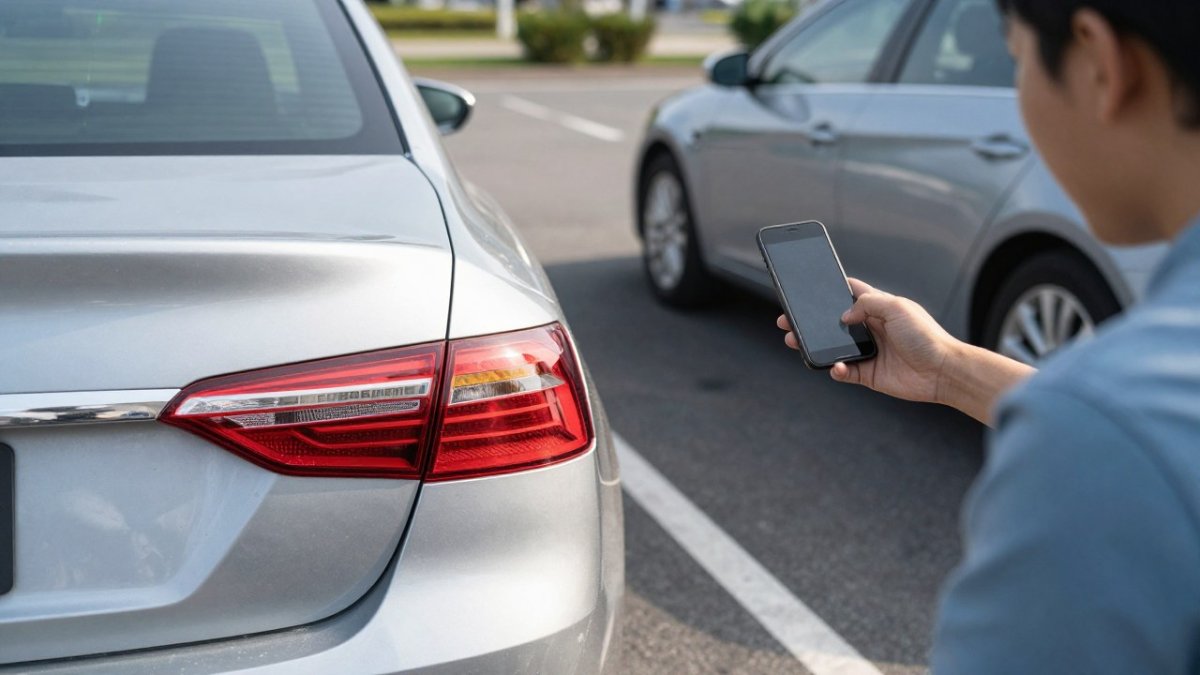
A common mistake is waiting to gather information until later. By then, the road is clear and the vehicles are gone. Do these things if you can do them safely:
- Photograph both vehicles from several angles, including the points of impact
- Photograph the traffic signals, stop signs, lane markings and road conditions
- Record the final resting positions of the cars
- Exchange names, phone numbers, insurance details and license plates
- Ask anyone who saw the crash for their contact information
Watch out: Do not admit fault at the scene, even as a polite apology. Insurers can use a casual admission against you later.
The evidence you gather in the first hour after a crash is usually the strongest, so these are the steps to take if you can do so safely. For a full timed list, see first-hour checklist after an accident.
| Evidence to collect | Why it matters | When |
|---|---|---|
| Photos of both vehicles from several angles | Shows damage and points of impact | At the scene |
| Photos of signals, stop signs and lane markings | Documents traffic controls and road conditions | At the scene |
| Final resting positions of the cars | Helps show how the collision happened | At the scene |
| Names, phone numbers, insurance details and plates | Lets you contact the other driver and insurers | At the scene |
| Contact details of anyone who saw the crash | Witnesses can support your account | At the scene |
How to Know Who Is at Fault in a Car Accident Police Report
A police report is often one of the first official records of a crash. It usually includes the officer’s account, diagram, driver statements and sometimes a note about which driver was cited. Many people assume the report decides fault, but that is not always the case. An insurer or court can reach a different conclusion.
Read the report carefully and check for errors. Look for mistakes in the names, vehicle details, location or the description of how the crash happened. If something is wrong, ask the reporting agency how to request a correction.
Keep in mind that the officer may not have witnessed the collision. Their conclusions often rely on the driver statements, the vehicle positions and the physical damage. Treat the report as strong evidence, but not the final word.
Car Accident Determining Fault by Location of Damage
Where the vehicles were damaged often tells a story. The point of impact, the pattern of damage and the final positions of the cars can show how the collision unfolded.
For example, damage to the rear of one vehicle and the front of another usually suggests the rear driver struck the car ahead. Damage along the side of a car may point to a failure to yield at an intersection. Accident reconstruction specialists study these patterns to recreate the sequence of events.
Photograph the damage on every vehicle, not just your own. Record the height and location of each impact if you can. This detail can support your account when drivers disagree about what happened.
How Adjusters Determine Who Is at Fault and How to Challenge Them
After a claim is filed, an insurance adjuster reviews the evidence and makes an initial fault determination. Adjusters typically work from the police report, recorded driver statements, photos, witness accounts, repair estimates and, in some cases, vehicle event data. Because an insurer’s goal is often to limit what it pays, an initial fault determination may be a negotiating position rather than a final ruling.
A common pattern is that the adjuster assigns a fault percentage early and then defends it. That is why the challenge process should be deliberate rather than emotional. Work through these steps in order:
- Request the basis of the decision in writing. Ask the adjuster to identify the specific evidence relied on, the traffic law or right-of-way rule applied, and the fault percentage assigned to each driver. A written request creates a record and forces the adjuster to articulate a theory you can rebut.
- Submit a written rebuttal with exhibits. Send copies (not originals) of your photos, witness contact information, a dated and signed account of the crash, and any repair or medical records that bear on the mechanism of injury. Number the exhibits and refer to them by number in the letter.
- Correct the record where it is wrong. If the police report misstates names, vehicle positions or the location, ask the reporting agency about its correction process and send the adjuster proof of the request. If the adjuster’s notes misquote you, point to the specific line and explain the discrepancy.
- Ask for a supervisor or manager review. If the adjuster will not move, request an escalation in writing and state the specific evidence the supervisor should review. Keep the request factual and short.
- Preserve your options under state law. Most states have an insurance regulator that accepts consumer complaints about claims handling, and states set deadlines for filing a lawsuit. A demand letter or a formal complaint can change the pace of a dispute, but the timing rules are strict, so confirm the current deadlines with a licensed attorney in your state.
Keep a claim log with the date, the adjuster’s name and title, the method of contact and a one-line summary of what was said. If the dispute later moves to a supervisor, a regulator or a court, that log is often the clearest timeline of what the insurer knew and when.
Watch out: Do not accept a settlement check or sign a release while you still dispute fault, because cashing a check or signing a release can end the claim even if you believe the fault percentage is wrong.
How to Prove Fault in a Car Accident Without Witnesses
Many crashes happen with no one else around to see them. The lack of a witness does not end your claim. Physical evidence and records can often fill the gap.
Useful sources include:
- Photos and video from your phone or a nearby business camera, if still available
- Vehicle damage patterns and the final resting positions of the cars
- Traffic camera footage or red-light camera records from the city or county
- Your own detailed written account, written soon after the crash
- Medical records that document injuries consistent with the type of impact
A common mistake is assuming footage will last forever. Many businesses overwrite security video within days. Ask for copies as early as you can, and request a preservation letter from your attorney if the footage matters to your case.
How Fault Percentages Affect Your Compensation
Many states use some form of comparative fault, which means fault can be shared between drivers and your recovery may be reduced by your share of the blame (comparative negligence | Wex | US Law). The rules are not uniform. Your state’s approach determines how fault allocation affects recovery, so confirm the rule that applies where your accident occurred.
Here is how the math works in practice. In general, the fault percentage assigned to you reduces what you can recover, so the percentage matters as much as the total damages.
Fault percentages also interact with the evidence in ways that are easy to miss. An adjuster may assign a higher percentage based on a driver statement taken at the scene, a citation, or an inference from damage patterns. That is why the evidence-preservation steps earlier in this guide matter: the same photo or witness statement that supports your account can also lower your assigned percentage.
Watch out: A fault percentage on a claim is not always final, but deadlines for disputing it and for filing a lawsuit are strict and vary by state. Confirm the current deadlines and fault rules that apply to your case with a licensed attorney as soon as possible, because a missed deadline can end the claim regardless of how strong the evidence is.
Booking a Free Call With a Florida Injury Attorney Today
Proving fault takes time, records and careful steps, and many people do not know where to start. 305-800-PAIN connects Florida accident victims with personal injury attorneys who can review the evidence, explain the fault rules that apply to your case and handle insurer disputes on your behalf. Call us today to be connected with a Florida injury attorney who can review your case.
Frequently Asked Questions
How do you prove an accident wasn’t your fault?
Start with the police report, which records officer observations and the parties’ statements. Then gather photos of both vehicles showing damage and final resting positions, the names and contact details of any witnesses, and dashcam or nearby surveillance footage if available. Compare this evidence against the other driver’s account. If the insurer still assigns fault to you, you can dispute the decision in writing, submit additional documentation, and ask for a supervisor review. A Florida personal injury attorney can review the evidence and advise whether a formal challenge is worth pursuing.
Does a police report decide who is at fault?
No. A police report is strong evidence, but it does not legally determine fault on its own. Officers often record their observations and any citations issued, yet insurers and courts weigh the report alongside statements, physical evidence and traffic law. Citing a driver in a report does not bind the insurer, and an officer who did not witness the collision may have only reconstructed events from the drivers. Review the report for errors and request a correction if facts are wrong.
How do you prove fault in a car accident without witnesses?
Without eyewitnesses, rely on physical evidence. Photos and video of vehicle damage, the point of impact, skid marks and final positions can show how the collision happened. Traffic camera footage, business surveillance, and phone or dashcam recordings may also be available, but many systems overwrite footage quickly, so request it early. Keep your own written account made soon after the crash, and get medical records that link injuries to the collision. Consulting a Florida attorney early helps preserve this evidence.
Should you admit fault after a car accident?
Avoid admitting fault at the scene or to insurers before you understand the facts. Statements made in anger or confusion can be used later to assign responsibility. Stick to describing what you saw and what happened, exchange insurance information, and let the claims process determine liability based on evidence. If you are unsure about a statement you already made, discuss it with a qualified attorney promptly.
