
Last Updated: November 8, 2026
Quick Summary
To find the right truck accident lawyer after a serious crash, ask about their truck case experience, verify Florida Bar standing, and get the fee terms in writing before signing. Choose someone who handles commercial vehicle cases and can act quickly, because evidence like logs and camera footage can be lost.
- Ask how many truck accident cases the lawyer has handled and how many went to trial.
- Confirm the attorney is licensed in Florida and in good standing with the Florida Bar.
- Get the contingency percentage, cost terms and lien handling in writing before signing.
- Ask who will work on your case day to day and how often you will receive updates.
- Contact a lawyer early so preservation letters can stop electronic truck data from being overwritten.
Table of Contents
- Why Serious Truck Accident Cases Need a Specialist
- How to Choose a Truck Accident Lawyer: A Comparison Framework
- Questions to Ask a Truck Accident Lawyer Before You Hire
- How Truck Accident Lawyer Fees Work
- Truck Accident Investigation and Evidence: What Disappears Fast
- What to Say and Avoid Before and During the First Consultation
- Make Your First Call Before the Evidence Is Gone
- Frequently Asked Questions
Finding a lawyer after a serious truck accident is harder than most people expect. At 305-800-PAIN, we connect Florida accident victims with experienced personal injury attorneys. (Source: Federal Motor Carrier Safety Administration (FMCSA) regulations)
A truck accident is not the same as a car accident. Commercial trucks are heavy, regulated and often operated by companies with their own legal teams.
Why Serious Truck Accident Cases Need a Specialist
Serious truck accident cases often involve federal trucking rules, company policies, driver logs and maintenance records that a general practice lawyer may never have handled. You can review the common causes of Florida truck accidents to see why specialized handling matters.
Many injured people also face catastrophic injuries, long hospital stays and expenses that continue long after the crash. Evaluating those future losses takes experience, and a specialist is more likely to understand what a fair claim looks like.
How to Choose a Truck Accident Lawyer: A Comparison Framework
Most people compare attorneys by advertising alone. A more reliable approach is to measure each lawyer against the same criteria. Use the framework below as a checklist during your first calls.
| Criterion | What to Look For | Red Flag |
|---|---|---|
| Truck case experience | Regularly handles commercial vehicle crashes | Mostly handles minor auto claims |
| Case results | Specific, verifiable outcomes | Vague claims with no detail |
| Trial experience | Has taken cases to court | Only discusses settlements |
| Communication | Clear answers to direct questions | Pressure to sign immediately |
| Fee terms | Written contingency agreement | Unclear costs or upfront charges |
Checking Experience With Commercial Truck Cases
Ask how many truck accident cases the lawyer has handled in the past few years, whether they have worked against major carriers, and what kinds of crashes they have litigated. Specific answers are usually more trustworthy than generalities.
Verifying Case Results and Credentials
Confirm that the attorney is licensed in Florida and in good standing with the Florida Bar. Ask for examples of similar cases, understanding that confidentiality rules may limit details. Be cautious of any firm that guarantees a specific result.
Questions to Ask a Truck Accident Lawyer Before You Hire
Bring a short list of questions to every consultation. Good questions reveal how the lawyer thinks and whether you will be comfortable working with them.
- How many truck accident cases have you handled, and how many went to trial?
- Who will actually work on my case day to day?
- How will you investigate the crash, and what evidence will you request first?
Pay attention to whether the lawyer answers clearly. Vague or evasive answers are worth noting.
How Truck Accident Lawyer Fees Work
Many personal injury lawyers who handle truck cases work on a contingency fee. The exact terms should be confirmed in writing before you sign. Many firms describe this as no fee unless they win, but the exact terms vary widely. You can also learn whether you can claim compensation after a Florida truck accident and what that involves. Read every fee agreement against the checklist below before you sign.
The Four Numbers That Decide Your Net Recovery
A contingency agreement is not one number. It is at least four, and they interact:
- The contingency percentage. The exact figure is set by the written agreement and varies by firm and by case posture. Ask whether the percentage increases if the case goes to trial or on appeal.
- Case costs (litigation expenses). These are the out-of-pocket expenses of building the case, accident reconstruction, medical record retrieval, expert witness fees, depositions, court filing fees, and crash data downloads. They are separate from the attorney’s fee.
- Whether costs come out before or after the fee. If costs are deducted first, the attorney’s percentage is calculated on the smaller remaining balance. If costs are deducted after, the attorney’s percentage is calculated on the gross recovery. The order matters, and it should be stated in writing.
- Liens and subrogation. Health insurers, hospitals, and Medicaid or Medicare may assert a right to be repaid from your settlement. A lawyer should identify likely liens early and explain how they will be negotiated, because an unresolved lien can reduce what you actually keep.
Ask the lawyer to walk you through a hypothetical: if the case settles for a given amount, what would the fee, costs, liens and your recovery be? A firm that cannot or will not run that math is a warning sign.
Reading the Fee Agreement Line by Line
Before signing, confirm each of the following appears in the written agreement:
- The exact contingency percentage, and whether it changes at trial or on appeal.
- A definition of “case costs” that lists what is and is not included.
- Whether costs are advanced by the firm and whether you are responsible for them if the case does not succeed.
Watch out: a verbal promise that “we only get paid if you win” does not tell you who pays the expert who reconstructs the crash. If the case loses and the firm advanced case costs, the agreement should say clearly whether you owe that money. Get the answer in writing before you sign.
Free Consultation Does Not Mean Free Case
Free initial consultations are common, but they cover only the intake conversation. Confirm before the meeting whether the consultation includes a case evaluation or records review, and whether the firm will put its fee terms in writing. A firm that pressures you to sign during the first call is rushing a decision that should be made carefully. (Source: National Highway Traffic Safety Administration (NHTSA) data on truck crashes)
Comparing Two Offers Side by Side
When you have fee agreements from two firms, compare them on the same four numbers: percentage, cost definition, cost-deduction order, and lien handling. A firm with a slightly higher percentage but a clearer cost structure and a track record of negotiating liens may leave you with more than a firm with a lower headline percentage and vague cost terms.
Truck Accident Investigation and Evidence: What Disappears Fast
In a truck crash, the evidence that decides the case is mostly in the carrier’s hands, and much of it is on a clock. Find out how to prove fault in a truck accident and what evidence supports that effort. A commercial truck case turns on records the trucking company generates, stores, and routinely overwrites. The earlier a lawyer sends preservation demands, the more of that record survives.
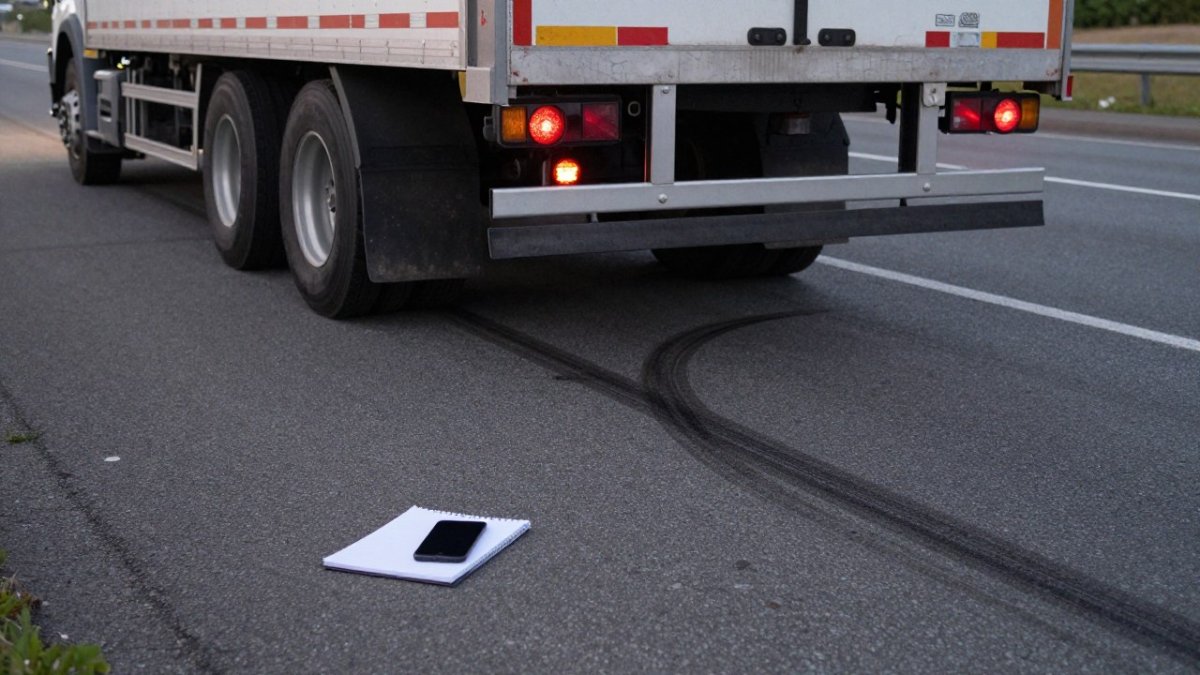
The Evidence Clock: What Expires and Roughly When
Retention periods vary by carrier, contract, and systems in use, so treat the following as a practical ordering of urgency rather than a fixed schedule. The shortest windows usually apply to data a truck generates electronically.
- Electronic logging device (ELD) data and hours-of-service records. ELDs record driving time, engine hours, vehicle motion, miles driven, and location. Carriers must retain certain ELD records under federal rule, but underlying telematics feeds and raw files are often overwritten on a rolling basis. This is usually the first item to demand.
- Event data recorder (EDR) or engine control module (ECM) data. Many heavy trucks capture pre-crash speed, braking, throttle, and steering inputs. Downloading this data typically requires the right equipment and, often, the carrier’s cooperation or a court order. If the truck is repaired or the module is replaced, the data can be lost.
- Dashcam and onboard camera footage. Forward-facing and driver-facing systems often overwrite footage on a loop measured in days or weeks. A prompt preservation letter is often the only thing that keeps it.
What a Preservation Letter Should Demand
A well-drafted spoliation or preservation letter does more than ask the carrier to “keep everything.” It identifies specific systems and record categories by name, states the date range, and puts the carrier on notice that destruction may lead to sanctions. A strong letter typically demands preservation of:
- ELD files and the underlying telematics data for the truck and driver for a defined period before and after the crash.
- EDR/ECM download data and any diagnostic reports.
- All onboard camera footage from the truck and any trailing or nearby vehicles.
Watch out: a carrier that receives a preservation letter may respond by producing a narrow set of records and calling it compliance. The lawyer should follow up with targeted requests and, where necessary, a court order, a letter alone does not guarantee the data still exists.
How a Lawyer Actually Investigates
Investigation in a serious truck case usually runs on several tracks at once:
- Scene and physical evidence. An accident reconstruction expert documents skid marks, debris, sight lines, and road conditions before they change.
- Record demands. Preservation letters and, later, formal discovery go to the carrier, the driver, and third parties such as shippers and brokers.
- Data download. ELD and EDR data are downloaded and analyzed against the driver’s logs and dispatch schedule to test whether hours-of-service rules were followed.
- Corporate discovery. The carrier’s safety policies, hiring practices, and maintenance history are examined for patterns supporting negligent hiring, training, or supervision claims.
- Witness and expert work. Eyewitness statements are taken early, and experts in trucking operations, braking systems, and accident reconstruction are retained as needed.
What You Can Do Before You Hire a Lawyer
You do not need to wait to hire a lawyer to start protecting evidence. If you are able:
- Photograph the scene, the vehicles, your injuries, and any visible road or weather conditions.
- Write down what you remember as soon as possible, including time of day, lane position, and what you saw before impact.
- Keep every medical record, bill, and discharge instruction.
A serious truck crash case is often won or lost on records that exist for only a short time. The single most useful step you can take is to get a lawyer involved early enough to send preservation demands before the carrier’s systems overwrite them.
What to Say and Avoid Before and During the First Consultation
Before the consultation, gather the police report number, insurance information, medical records, photographs and a timeline of events.
During the consultation, be honest and complete. Describe your injuries and symptoms accurately, including ones that seem minor.
Watch out: insurance adjusters may contact you soon after the crash and ask for a quick recorded statement. Politely decline and refer them to your attorney.
Make Your First Call Before the Evidence Is Gone
Truck accident cases are time-sensitive, and the evidence that supports your claim may not stay available for long.
At 305-800-PAIN, we connect injury victims with qualified Florida personal injury lawyers, usually within five minutes, and our team is available around the clock. Call us today to start the process, and let an experienced attorney begin protecting your rights and your evidence.
Frequently Asked Questions
How much are most truck accident settlements?
Settlement amounts vary widely because they depend on the severity of injuries, medical costs, lost wages, future losses, and how much liability can be proven against the driver, trucking company, or other parties. A lawyer can only estimate a realistic range after reviewing your medical records, the crash report, and the company’s insurance coverage. Be cautious of anyone who promises a specific figure before the investigation is complete. Ask any attorney you consult to explain how they evaluate damages in cases like yours.
What percentage do lawyers take from a truck accident settlement?
Many personal injury attorneys work on a contingency fee, meaning they are paid a percentage of the amount recovered rather than an hourly rate. The exact percentage and how it applies to case costs should be stated in a written fee agreement before you sign. Ask whether the percentage is calculated before or after case expenses are deducted, and whether there is any fee if you do not recover money. Get these terms in writing and compare them across several firms.
What experience should a lawyer have with serious truck accident cases?
Look for an attorney who handles commercial vehicle crashes regularly, understands federal trucking regulations, and has experience with catastrophic injury claims. Ask how many truck cases they have taken to trial and whether they have worked against major trucking companies and their insurers. Verify case results through court records or the state bar when possible, and confirm the attorney is licensed and in good standing.
